
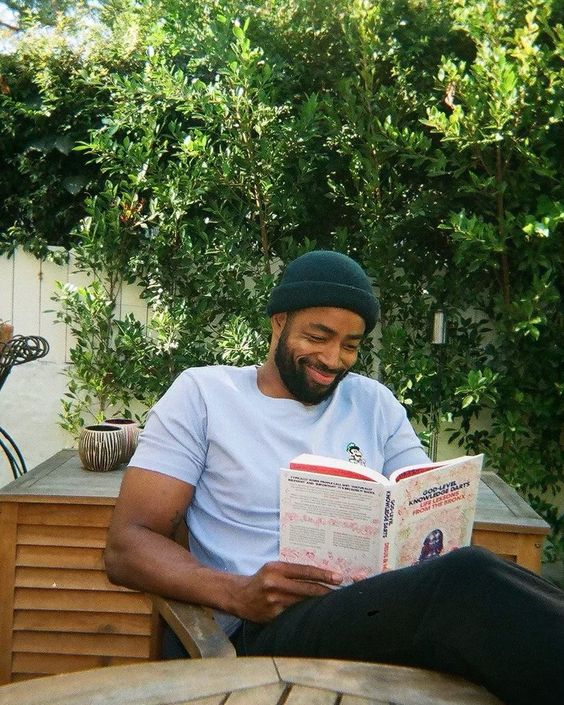
I can’t remember exactly how Range got in front of me. When the book came out in 2019, I was almost 27 and about a year into a big career change. Looking back, it was one of those moments where the right piece of media comes to you when you need it the most. I was working my second Big ManTM job, had been single for a few years, and was starting to see how life in DC was changing all around me. Whether it was work events bringing new friends, people moving to save on rent, buy, and be closer to family, or beloved neighborhood spots closing, I had to figure out how I’d want to live my life.
In the book, Epstein introduces the idea that difficult problems are best solved by using tools and ideas from several different subjects. While he shares several stories from science, my favorite stories were grounded in sports. David describes the story of Roger Federer who, rather than living, eating, and breathing tennis like the rich, bratty, tennis kids (no shade if that was you!), spent a huge chunk of his childhood trying sports other than tennis. David writes, “He dabbled in skiing, wrestling, swimming, and skateboarding. He played basketball, handball, tennis, table tennis, badminton over his neighbor’s fence, and soccer at school.” Although Federer started to focus on tennis as he got older, he felt that much of his success was due to the coordination and athleticism he developed playing a wide range of sports.
This story was very familiar to me. As a youth and a hooper, I’d heard several times about how other sports helped basketball players develop their finesse and footwork. The two that stood out to me were how soccer helped both Steve Nash and Kobe Bryant develop their footwork. Michael Jordan’s offseason ballet lessons come to mind as well. But without being a professional athlete, it never occurred to me that these stories could apply to my own life.
When you’re a kid, it’s so natural for you to try everything that interests you. According to Mom, my journey as a generalist started from birth. For some reason, I’ve always had this desire to replicate whatever I see in the world. As a baby, this was manifested as copying my Dad and writing left-handed (I’m right handed). This graduated into drawing my favorite cartoon characters, trying to recreate building structures out of paper, and joining the step team where the instructor said, “Oh wow, I didn’t know you had rhythm!” when I thought I was just copying the choreo. In fourth grade, we had a music teacher come in and show us the basics of music theory. After learning what a quarter note was, I thought I was gonna be in a band! My first percussion class was soon after and I got my first set of sticks in the sixth grade. Trying all of these various things felt natural, but when I swapped coasts in seventh grade, somehow I slowly lost these things; I stopped drawing, playing the drums, dancing, and crafting. The reasons for that are for another time, but it felt like a little part of me died.
Fast forwarding to 2019, I would pick up this book off and on. Over time, I slowly built the confidence to try new things without holding back and worrying about being terrible, the mindset of a kid, honestly. For folks that know me well, I’d been a soccer fan for a minute, but having not played it as a kid, I didn’t dare try to play pickup and join rec leagues. Now, I had the motivation to just get out there, even if I was terrible. I started to rethink my wardrobe and experimented with more colors and less popular brands. And most importantly for this blog, I started to fall in love with the written word.
While it wasn’t clear five years ago, it’s clear to me now that with each new challenge, or attempt to try something new, I’m actually developing my skills as a generalist. Every new interest that may have seemed pointless, is reframed as a step on my journey. As a lover of complex problems, this has helped not only my career, but more so my personal life. I highly recommend folks read David’s book as it can be so satisfying to take on creative or unfamiliar challenges, especially to balance with the daily grind. It can often pay off in ways that you can never imagine.
Take care,
Sean the Architect


Leave a Reply